

Google officially launched the May 2026 Core Update on May 21, 2026, at 8:40 AM Pacific Time, making it the second broad core update of the year and arriving just 43 days after the March 2026 Core Update was completed. Google confirmed that the rollout may take up to two weeks, with completion expected around June 4, 2026.
SEO volatility trackers and industry observers reported significant ranking fluctuations within the first 48 hours of the rollout. Websites across industries experienced visibility gains and losses, making this one of the most closely watched algorithm updates of the year.
If your rankings, traffic, or AI Overview visibility have changed recently, this guide will help you understand what happened, whether your website was affected, and what actions you should take next.
One important note: because the rollout is still ongoing, avoid making major SEO decisions until the update is fully completed and rankings stabilise.
What is a Google Core Update?
A Google Core Update is a broad change to Google’s ranking systems. Unlike spam updates or manual penalties, core updates are designed to improve how Google evaluates content quality, relevance, trustworthiness, and usefulness across its entire search index.
A ranking drop after a core update does not automatically mean your website violated any guidelines. Instead, Google’s systems may now consider competing content more useful or relevant for a given search query.
Google’s update frequency has accelerated significantly. Between 2019 and 2023, core updates typically occurred every four to six months. In contrast, 2026 has already seen multiple major ranking events within a few months.
Recent Timeline:
- March 2026 Core Update: March 27 – April 8
- May 2026 Core Update: Started May 21 and expected to complete around June 4
What Actually Changed in the May 2026 Core Update

Gemini-Based Quality Models Are Influencing Search More Deeply
The timing of this update has attracted significant attention because it arrived immediately after Google I/O 2026, where Google announced major AI-driven changes to Search and expanded the role of Gemini across its products. Industry analysts widely believe Google’s ranking systems are becoming increasingly dependent on advanced AI quality evaluation models.
The practical implication is clear. Google is moving beyond keyword matching and placing more emphasis on whether content genuinely satisfies user intent.
Content that simply repeats information already available online is struggling, while content that demonstrates expertise and solves real problems is performing better.
E-E-A-T Signals Matter More Across Every Industry
E-E-A-T stands for:
- Experience
- Expertise
- Authoritativeness
- Trustworthiness
Historically, these signals were most important in health, finance, and other YMYL (Your Money or Your Life) industries. However, recent ranking patterns suggest Google is applying these standards more broadly across all niches.
Websites featuring named authors, detailed author bios, editorial guidelines, and clear evidence of expertise generally show greater ranking stability than anonymous content sites.
For businesses, this means author transparency is no longer optional. It is becoming a competitive advantage.
Topical Authority is Outperforming Broad Publishing
One of the strongest trends from recent core updates is Google’s preference for depth over breadth.
Websites that publish dozens of unrelated topics purely for traffic acquisition are increasingly losing visibility. In contrast, brands that focus on a specific subject area and build comprehensive topic clusters are gaining authority.
For example, a digital marketing agency publishing consistently about SEO, PPC, content marketing, and analytics is more likely to earn trust than a website covering marketing today, health tomorrow, and cryptocurrency the next day.
Low-Value AI Content Faces Greater Risk
Google has repeatedly stated that AI-generated content is not inherently against its guidelines.
However, content created solely to scale production without adding expertise, original research, first-hand experience, or unique insights continues to face increasing challenges.
Pages that simply summarise existing search results, reword competitor articles, or publish large volumes of low-value content are among the most vulnerable content types during core updates.
The issue is not AI.
The issue is a lack of value.
AI Overviews and Traditional Rankings Are Becoming Separate Systems
A major shift emerging in 2026 is the growing separation between traditional rankings and AI Overview visibility.
A page may rank highly in organic search but never appear in AI-generated answers. Similarly, content cited in AI Overviews may not always hold top traditional rankings.
Businesses now need strategies that address both environments:
- Traditional search rankings
- AI citation eligibility
This is becoming one of the most important developments in modern SEO.
Who Was Affected — Winners and Losers

Site Types That Lost Rankings
Several patterns are emerging among websites experiencing visibility declines:
- Aggregator websites that compile information without adding original value
- Thin affiliate pages lacking real-world testing
- Comparison sites rely heavily on manufacturer information
- Topically scattered publishers
- Mass-produced AI content sites
- Anonymous websites without clear authorship or expertise signals
The trend suggests Google is becoming more selective about rewarding content that does not demonstrate unique value.
Site Types That Gained or Held Rankings
Several categories appear to be performing well:
- Deep niche specialists
- Industry experts with named authors
- Brands publishing original research
- Websites with strong topic clusters
- Official company websites
- Government and institutional sources
- Established publishers with strong trust signals
These sites typically provide expertise, authority, and unique information that cannot easily be replicated.
Industries to Watch Closely
Some sectors traditionally experience higher volatility during core updates:
- Health and medical websites
- Finance and investment content
- Legal services
- News publishers
- Affiliate websites
- Product review websites
- Large-scale AI publishing networks
Businesses operating in these industries should monitor performance especially closely throughout the rollout period.
How to Diagnose Whether You Were Hit
Step 1: Confirm It is the Update
Open Google Search Console and compare:
May 1–20 versus May 22 onward
Look for:
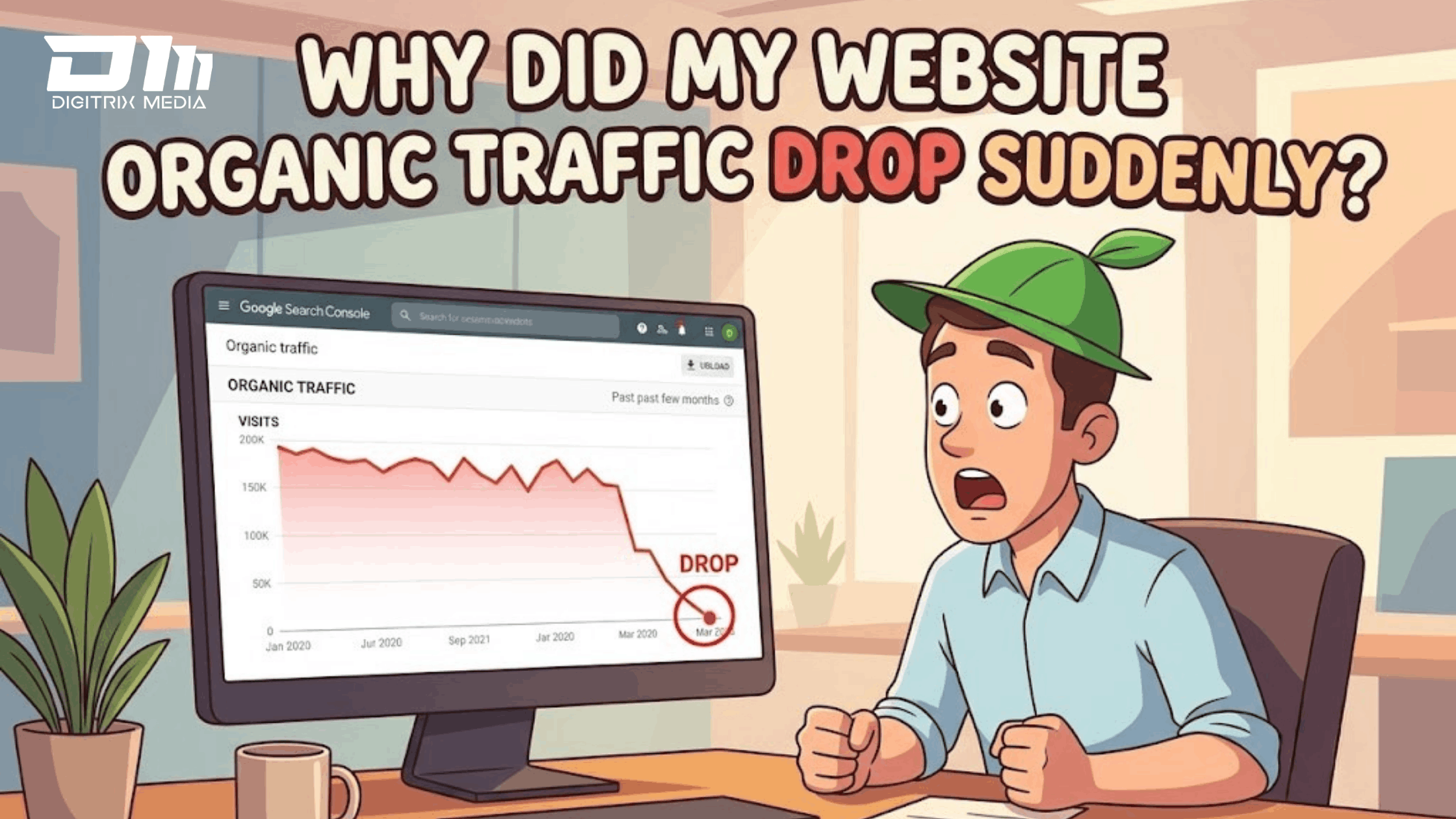
- Click declines
- Impression declines
- Average position drops
If clicks and impressions are both declining, the update may be influencing visibility.
Do not rely solely on Google Analytics traffic.
Search Console provides much better insight into ranking changes.
Step 2: Identify the Type of Impact
Determine whether the decline is:
Site-wide:
Potential quality, trust, or authority issue.
Folder-level:
The specific content category is losing value.
Page-template level:
Blog posts, product pages, or location pages are affected consistently.
Query-level:
Google may be reinterpreting user intent.
Understanding the pattern is more important than examining individual keywords.
Step 3: Export Your Biggest Losers
In Search Console:
- Navigate to Pages
- Sort by the largest position decline
- Export your top 50 affected URLs
Look for common characteristics:
- Same topic cluster
- Same content format
- Same author
- Missing author information
- Similar page templates
Patterns reveal causes.
Step 4: Wait Until the Rollout Completes
Google has advised that rankings may continue fluctuating throughout the rollout period. Many SEO professionals also report that rankings can take several additional days to settle after the official completion date.
Avoid making major content changes during the rollout.
Analyse first. Act second.
The SEO Recovery Guide — What to Do Now
Audit by Page Type, Not the Entire Website
Group affected pages into categories:
- Blog posts
- Product pages
- Service pages
- Category pages
- Location pages
Each page type often requires a different recovery strategy.
Strengthen Author Credentials
Every important page should include:
- Named author
- Professional bio
- Relevant expertise
- Editorial review information
For YMYL websites, this is becoming increasingly important.
Upgrade Thin Content
Ask a simple question:
Does this page add something unique?
If the answer is ‘no’, consider adding:
- Original research
- Case studies
- Expert commentary
- Proprietary data
- First-hand experience
- Visual examples
Pages that merely repeat existing information are becoming less competitive with every update.
Build Topical Authority
Choose your core expertise area and expand around it strategically.
Create:
- Pillar pages
- Supporting articles
- Internal linking structures
- Topic clusters
Businesses that stay focused on their expertise consistently perform better during core updates.
Optimize for AI Overviews
AI Overview visibility increasingly rewards content that is:
- Highly specific
- Well-structured
- Fact-based
- Source-supported
- Easy for AI systems to summarize
Recommended actions:
- Use schema markup
- Cite reputable sources
- Answer questions directly
- Structure content with clear headings
- Consider implementing llms.txt guidance where appropriate
Perform a Technical SEO Review
Check for:
- Duplicate content
- Thin pages
- Broken links
- Crawl errors
- Poor Core Web Vitals
- Orphan pages
- Indexing issues
Technical weaknesses rarely cause core update losses directly, but they often reduce a site’s ability to compete.
Set Realistic Recovery Expectations
One of the biggest mistakes businesses make is expecting instant recovery.
In reality:
- Minor improvements may appear within weeks
- Significant recovery often occurs after future core updates
- Most successful recoveries take two to four months of consistent improvement
Focus on long-term quality rather than quick fixes.
What This Update Tells Us About the Future of SEO
The May 2026 Core Update reinforces several important realities.
First, shortcut SEO strategies continue to lose effectiveness.
Second, Google is rewarding websites that demonstrate genuine expertise, topical authority, and trustworthiness.
Third, AI-powered search experiences are becoming a permanent part of the search ecosystem.
The formula for sustainable SEO success increasingly looks like this:
Helpful Content + Topical Authority + E-E-A-T + Strong Brand Signals + Technical Excellence
Businesses that invest in content as a long-term asset are positioning themselves to benefit from future algorithm updates rather than fear them.
As Google’s AI systems continue evolving, the gap between high-quality publishers and low-value content producers is likely to widen further.
Conclusion
If you’re concerned about the Google May 2026 Core Update, focus on three immediate actions:
- Review Google Search Console and measure the impact accurately.
- Identify which page types or content clusters were affected.
- Create a prioritised improvement plan before making any major changes.
Most importantly, be patient.
The rollout is still ongoing, and rankings may continue shifting until Google confirms completion. Acting too quickly can create more problems than it solves.
If you’re unsure whether your website was affected or need help building a recovery strategy, Digitrix Media can help. Our SEO specialists can perform a detailed website audit, identify weaknesses, and create a recovery roadmap tailored to your business.
The businesses that adapt to Google’s evolving standards today will be the ones leading search results tomorrow.