

You log into Google Search Console, expecting another ordinary Monday.
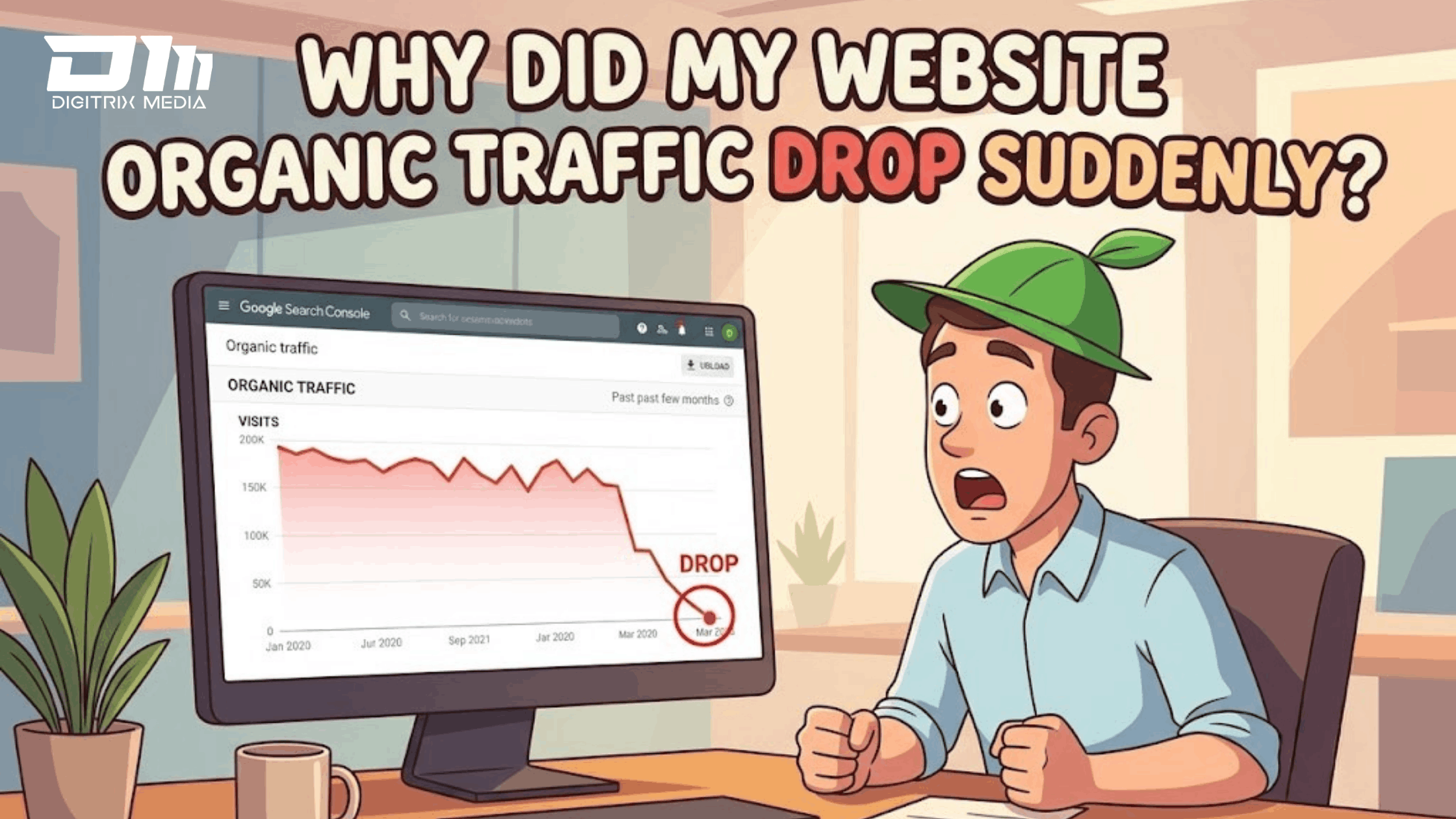
Instead, the organic traffic chart looks like a steep ski slope, heading south. Enquiries have slowed, and you’re wondering whether Google’s latest update has wiped out months of hard work.
Your first thought: Google penalised my website!!!
It’s a situation every SEO agency has dealt with, and the cause is rarely what business owners expect.
While some immediately blame Google algorithms and start rewriting pages, changing title tags, or publishing more content. Some go as far as redesigning the website without even identifying the actual problem.
If you’re a new business owner, this is your worst nightmare. You have poured time, money, and energy into your website, only to watch your visibility vanish overnight. More often than not, a sudden organic website traffic drop comes down to one of four things. Google has changed how it evaluates content, your website accidentally crashed, changing search behaviour due to AI, or your competitor is outdoing you.
The key to retaining your traffic is to figure out what happened before making changes. The sooner you identify the real cause, the sooner you can stop expensive guesses and start fixing the right problem.
This guide walks you through the same diagnostic process our technical SEO team uses when a client experiences a sudden drop in Google ranking.
4 Things That Help Diagnose and Recover Website Traffic Drop
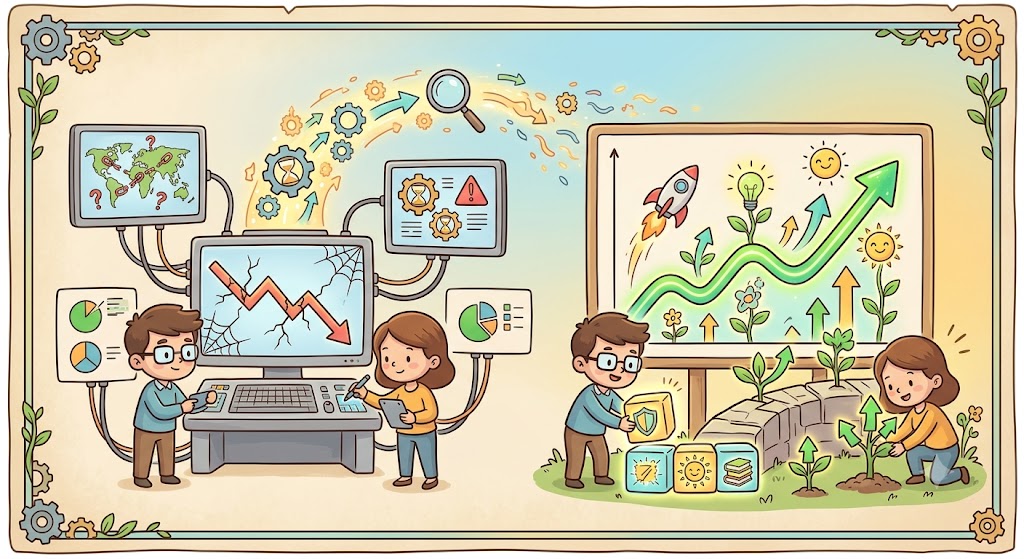
When a client tells us they’ve experienced a sudden drop in Google ranking, we don’t start changing pages. We start a structural diagnosis that almost always reveals where visibility is leaking.
Here’s the same four-step process our SEO team follows before recommending any fixes.
1. Isolate the Timeline & Check for Core Updates
Before even deciding to make any changes, find out:
When did the traffic actually fall?
While it may sound like the obvious first step, many businesses never check the timeline. They only notice the drop after a weekly or monthly report lands in their inbox.
Start by comparing Google Search Console and Google Analytics reports.
- Did the traffic disappear overnight?
- Did it decline steadily over 3-5 days?
- Or has it been slipping gradually for several weeks?
The pattern matters because every type of traffic loss leaves different clues.
For example, broad Google Core Updates rarely affect every page equally. We’ve seen websites where blog articles lost visibility while service pages continued generating enquiries. Looking only at total traffic would have hidden that pattern completely.
Next, compare the drop against Google’s Search Status Dashboard. If your traffic declined around a Google Core Update or spam update, do not start immediately rewriting everything. Google’s rollout can take days or even weeks to settle, and rankings often fluctuate throughout the process.
2. Look for the Technical “Tripping Hazards”
Here’s something many business owners don’t expect. Sometimes Google hasn’t stopped sending traffic. Your website has actually stopped measuring it.
One of the quickest checks we perform during a traffic audit is confirming that tracking is still working correctly. A website migration, a plugin update, or a new theme can accidentally remove the GA4 tag without anyone noticing.
We’ve seen businesses panic over a traffic loss that turned out to be nothing more than a broken analytics implementation.
If your tracking looks fine, move on to technical issues that can genuinely affect visibility. During web development, it’s common to temporarily block search engines from crawling a staging site. Occasionally when you switch off the robots.txt file, the instruction is pushed live with the new website.
Next, you should also check indexing inside Google Search Console. Pay close attention to sudden increases in:
- Excluded pages
- 404 Errors
- Redirect issues
- Crawl anomalies
- Rendering problems
It’s surprising how often the answer sits inside your own deployment history rather than Google’s algorithm. One isolated error rarely causes a major decline. A collection of technical issues usually does.
3. AI Overviews & “Zero-Click” Realities
This is where diagnosing organic traffic drop can get complicated. Today, traffic and rankings no longer move together.
Google AI Overviews answer many informational queries directly within the search results. Users receive a summary, find what they need, and never visit the original source.
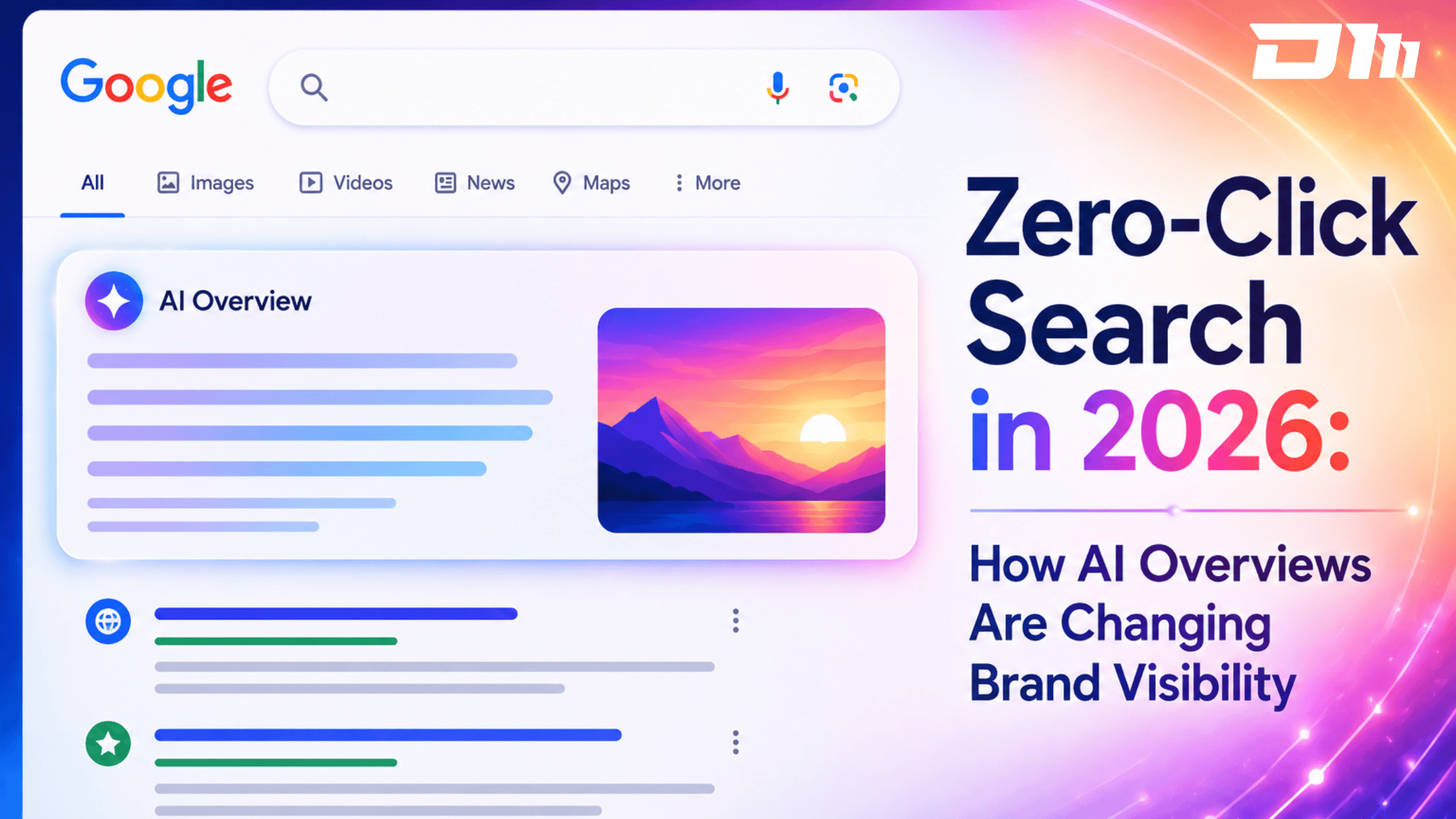
Also Read: Zero-Click Search in 2026: How AI Overviews Are Changing Brand Visibility
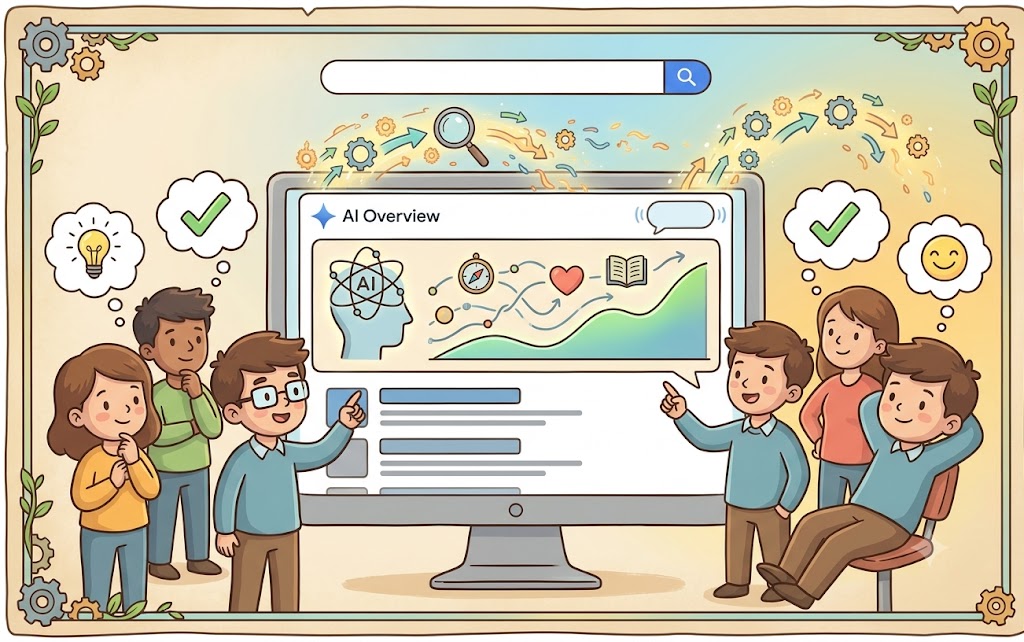
It’s created a pattern we’re seeing more frequently across Search Console reports. Average rankings stay almost exactly the same, but impressions continue to grow and clicks quietly decline month by month. Many businesses assume they’ve lost visibility, but in reality, they have lost the click share.
This is a very different problem altogether. Businesses adapting to this problem aren’t producing generic content; rather, they are publishing material that AI summaries struggle to replace.
Your content should be based on original research, industry commentary, first-hand case studies, proprietary frameworks, and expert opinions.
Ask yourself a simple question: if ten competitors asked ChatGPT to write the same article, would yours offer something different? If the answer is no, Google has less reason to recommend it.
4. Competitor Leapfrogging or Lost Links
Not every traffic drop begins with your own website. Sometimes someone else simply becomes more useful. One mistake businesses make is comparing today’s rankings with last month’s. A better comparison is between your content and the pages now occupying the positions you used to own.
- Have competitors refreshed outdated pages?
- Published new commercial guides?
- Built stronger internal links?
- Earned high-quality backlinks?
- Expanded topical authority?
We’ve seen businesses lose valuable rankings without making a single mistake themselves. Your competitors simply invested more consistently in improving content and user experience. Backlinks deserve attention too.
A sudden loss of authoritative referring domains can weaken ranking, particularly for competitive commercial keywords. While links aren’t the only ranking factor, losing several trusted references within a short period can make it easier for competitors to move ahead.
Rather than chasing every ranking fluctuation, focus on understanding why another page deserves Google’s attention more than yours. That question usually leads to better decisions than blindly updating keywords.
Is Your Traffic Drop Costing You Revenue?
When your website’s organic traffic drops suddenly, every day spent guessing can cost valuable leads and revenue.
The instinct is often to rewrite content, change page titles, or blame it on Google’s latest update. In reality, those actions can make it even harder to identify the root cause. The most effective SEO recoveries begin with careful diagnosis, not quick fixes.
Our technical SEO specialists manually investigate every layer of your website, from algorithm updates and crawlability to AI search visibility, conversion data and competitor movements. That allows us to identify where traffic is leaking.
Book a complimentary traffic diagnosis call, and let our team uncover exactly what’s affecting your visibility, rankings, and revenue before the problem grows even bigger.